Understanding Impact Fees in Wisconsin
Wisconsin law allows municipalities to charge impact fees on new development. However, the law also establishes rules that municipalities must follow when creating, collecting, using, and managing those fees. Simply put, municipalities are allowed to charge impact fees—but they must follow the law when they do it.
Unfortunately, there are times when municipalities may not be following all of the requirements established under Wisconsin law. When that happens, builders, developers, property owners, and taxpayers should understand the law and be willing to ask questions. Municipalities should be held accountable for following the same laws they are responsible for administering.
What Is an Impact Fee?
An impact fee is money that a municipality charges because a new development is expected to create a need for certain additional public facilities.
Think of it this way: when new homes or businesses are built, more people may use things like roads, parks, water systems, sewer systems, or other public facilities. Wisconsin law allows a municipality, under certain circumstances, to charge new development for an appropriate share of the cost of providing or expanding certain public facilities needed because of that development.
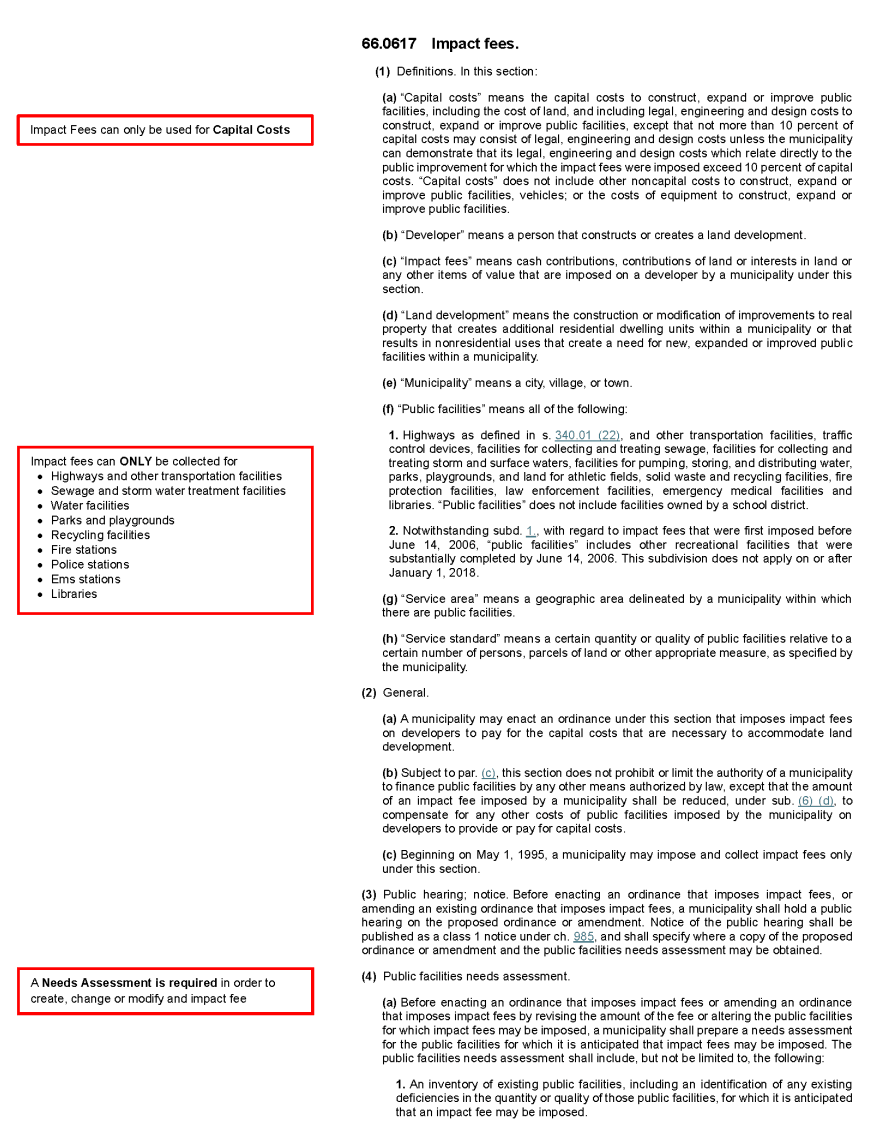
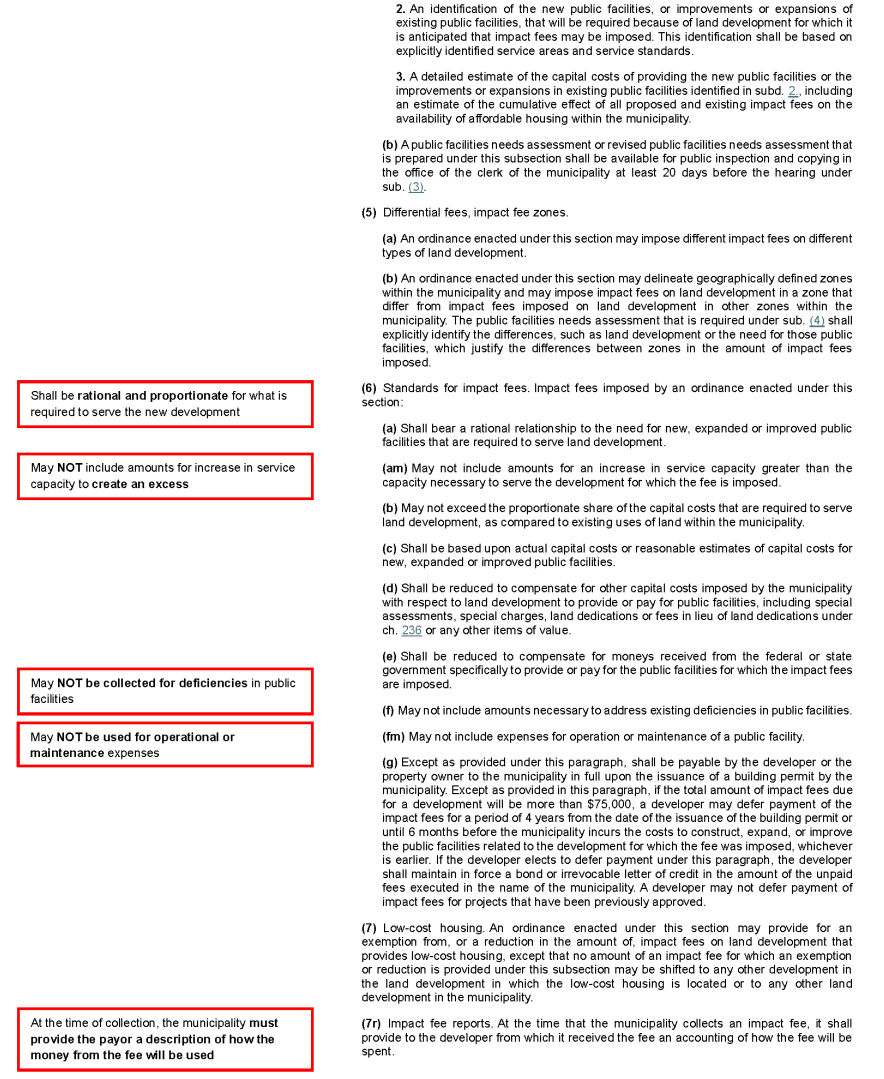
But an impact fee is not simply extra money a municipality can collect and spend however it chooses. Wisconsin law places requirements and limitations on how impact fees are established, calculated, collected, and used. The fees must be connected to eligible public facilities and the needs created by new development, and municipalities must comply with the requirements established by state law.
Standing Up for the Law and the Local Homeowner
(Court case: MBA vs. City of Delafield)
Occasionally, the Metro Builders Association (MBA) steps in on behalf of local homeowners and our members when we believe a municipality is not following the laws governing the home building and development process. Impact fees are one of those areas. These fees ultimately become part of the cost of creating a new home, which means improperly collected, managed, or retained impact fees can ultimately affect the price paid by the homeowner.
In December 2023, the MBA filed an appeal with the City of Delafield, following the appeal process established in the City’s own ordinances. The MBA raised several concerns about the City’s administration of its impact fees, including its reliance on an approximately 23-year-old needs assessment, the projects for which impact fees were being collected, how collected funds were being accounted for and held, and the information being provided to those paying the fees.
The MBA’s position was straightforward: municipalities are allowed to collect impact fees, but when they do, the law must be followed. When impact fees are collected, spent, or held beyond the time permitted by law, those responsible for paying the fees — including the homeowners who ultimately bear those costs — are entitled to the protections provided by the law.
Among the remedies requested in the MBA’s appeal was the refund of certain impact fees that the MBA believed had not been handled in accordance with the applicable requirements. After approximately a year and a half, the City denied the MBA’s appeal. Believing the City’s decision was wrong, the MBA filed an action in Waukesha County Circuit Court in May 2025.
In July 2026, the Court reversed the City Council’s decision denying the MBA’s request for the refund of certain impact fees and ordered the Council to reconsider that portion of the appeal. In its written decision, the Court found that the Council’s interpretation and application of its own impact fee ordinance was “not according to the law,” “unreasonable and arbitrary,” and represented the Council’s “will rather than its judgment.” The Court also determined that the evidence considered by the Council was not sufficient for it to have reasonably reached the determination it made.
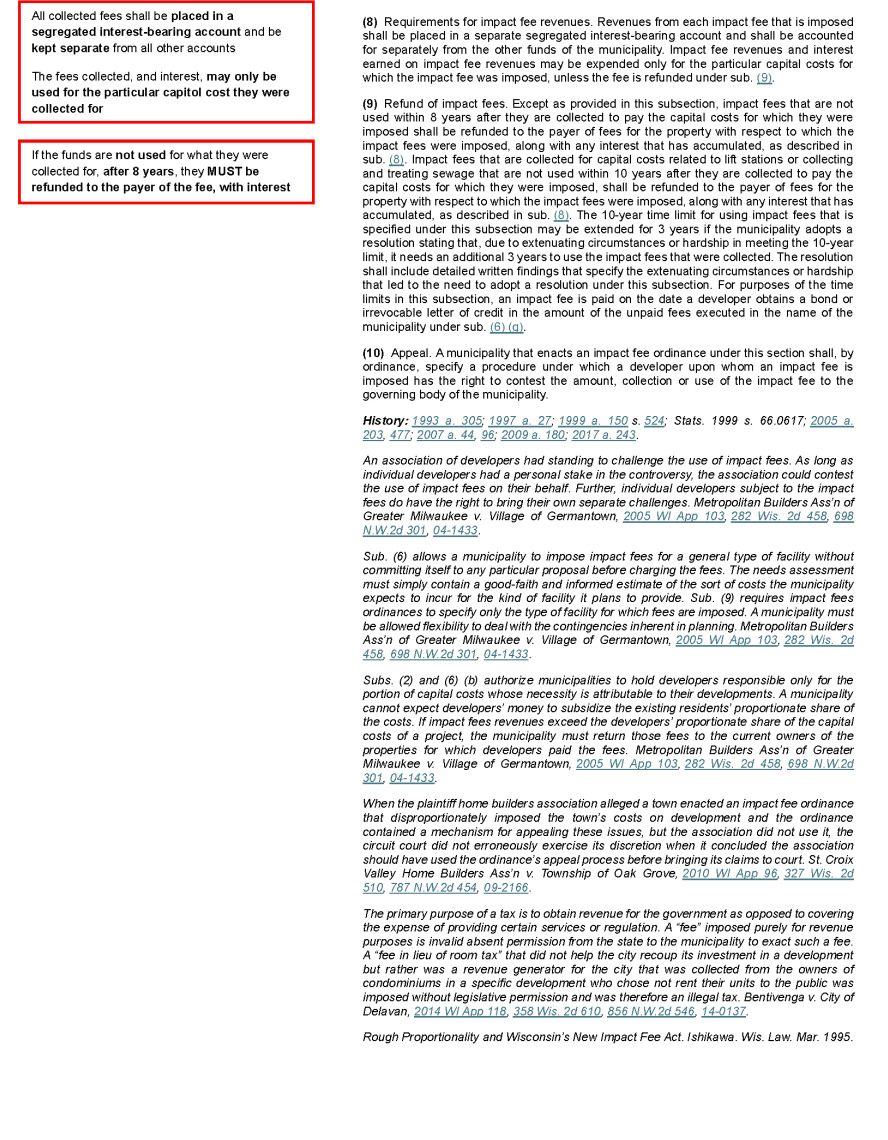
The Court directed the City Council to reconsider the MBA’s refund request and specifically identified questions for the Council to consider, including whether impact fee revenues and the interest earned on those revenues were spent only on the capital facilities for which the fees were collected, whether any fees went unused for more than ten years, and whether unused fees must be refunded to the appropriate property owners.
The Court also made clear that, when the matter returns to the City, the MBA may argue that Delafield’s municipal impact fee ordinance does not comply with Wisconsin Statute § 66.0617 and may seek additional relief based upon that argument.
The MBA looks forward to the City reconsidering the appeal as ordered by the Court. This has never been about preventing municipalities from collecting lawful impact fees. It is about accountability. If a municipality chooses to collect impact fees, it must follow the rules governing those fees, properly account for the money it collects, use it for its intended purposes, and return money when required. Ultimately, these dollars come from the people building and buying homes in our communities — and they deserve nothing less.
Read the Law for Yourself
Below you will find Wisconsin Statute § 66.0617, the state law governing impact fees. We encourage you to read it for yourself. The law establishes what municipalities may do, what they must do, and the limitations placed on impact fees.
Impact fees are permitted in Wisconsin—but so are the protections and requirements contained in the law. The entire statute matters, and it needs to be followed as written.